

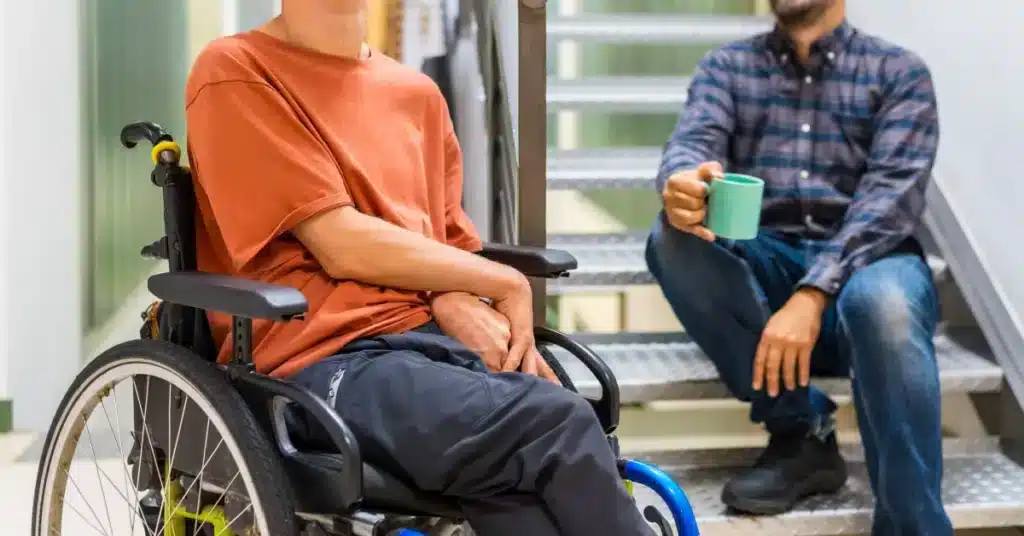
If your adult child or family member with a developmental disability was hurt, neglected, or abused in a group home, a CILA abuse and neglect lawyer at Mixan Mahony, LLC can help your family understand what happened and what Illinois law allows. A Community Integrated Living Arrangement (CILA) is a home where a small number of adults with developmental disabilities live with staff support. We serve families across Illinois from our Chicago office, with phone and video meetings available.
On This Page

How CILAs Are Licensed and Overseen in Illinois
Under the Community-Integrated Living Arrangements Licensure and Certification Act, 210 ILCS 135, the Illinois Department of Human Services (IDHS) licenses community developmental services agencies. Those agencies certify the CILA homes they operate, and the Act describes a CILA as a living arrangement where 8 or fewer people with a developmental disability live under the agency’s supervision.
The licensed agency must certify to IDHS that residents receive appropriate services and that programs comply with the Act, the Mental Health and Developmental Disabilities Code, and IDHS rules. The Act also requires IDHS to inspect the records and premises of each certified CILA at least once every 2 years.
Common Harm a CILA Abuse and Neglect Lawyer Investigates
Families contact us about many kinds of harm in group homes, including:
- Choking on food that did not match the ordered diet texture.
- Falls and unexplained fractures during transfers or unsupervised time.
- Elopement, when a resident leaves the home unnoticed and is hurt.
- Medication errors, missed doses, and overmedication.
- Physical, sexual, or emotional abuse by staff or another resident.
- Failure to seek medical care promptly for illness or injury.
The IDHS Office of the Inspector General
Under 20 ILCS 1305/1-17, the IDHS Office of the Inspector General (OIG) investigates and reports on allegations of abuse, neglect, or financial exploitation of people receiving services from community agencies that are operated, licensed, funded, or certified by IDHS and not licensed or certified by another state agency. An OIG finding can be substantiated, unsubstantiated, or unfounded.
An OIG investigation is separate from a civil claim. Families can pursue a claim whether or not the OIG substantiates an allegation, although OIG reports can be useful evidence.
Records That Matter in a CILA Case
We request the Individual Service Plan, behavior support plans, dining and swallow plans, medication administration records, staffing schedules, incident reports, and any OIG reports. These records show what the home knew about the resident’s needs and whether staff followed the plan.
When Neglect in a CILA Group Home Leads to a Death
When an adult with a developmental disability dies after neglect or abuse in a CILA group home in Chicago or elsewhere in Illinois, the family may have a wrongful death claim and a survival claim. Mixan Mahony, LLC reviews the Individual Service Plan, medication records, and staffing logs to learn what went wrong.
CILA deaths can follow failures such as:
- Choking when diet texture or mealtime supervision orders are not followed
- Missed seizure medication or other medication administration errors
- Elopement, drowning, or burns during gaps in supervision
- Falls during transfers or unwitnessed seizures
- Delayed medical care after a change in condition
CILAs are licensed under the Community-Integrated Living Arrangements Licensure and Certification Act (210 ILCS 135), and abuse and neglect allegations may be investigated by the IDHS Office of the Inspector General (20 ILCS 1305/1-17). An OIG finding does not decide a civil case, but the investigation can be an important source of information.
Under 740 ILCS 180/2, the personal representative brings a wrongful death claim for the surviving spouse and next of kin, generally within 2 years after the death, with exceptions in the statute. A survival claim under 755 ILCS 5/27-6 carries forward claims for injuries suffered before death.
Other deadlines can apply:
- Claims against physicians, registered nurses, or hospitals arising out of patient care may fall under 735 ILCS 5/13-212.
- Claims against a local public entity may be subject to the one-year filing rule in 745 ILCS 10/8-101, with a separate rule for patient care claims.
Learn more about Illinois wrongful death claims and choking injuries in Illinois care settings.
Mixan Mahony, LLC, 444 W. Lake St., Suite 1707, Chicago, IL 60606. (312) 262-3971. Find our Chicago office on Google Maps.
Illinois Deadlines and Fault Rules in Care Facility Cases
- Most injury claims: 2 years under 735 ILCS 5/13-202.
- Medical providers: 2 years from discovery with a 4-year outer limit under 735 ILCS 5/13-212(a), and different rules for minors.
- Nursing homes: under the Nursing Home Care Act, 210 ILCS 45/3-601, the owner and licensee are liable for intentional or negligent acts or omissions of their agents or employees that injure a resident, and under 210 ILCS 45/3-602 the licensee pays actual damages, costs, and attorney’s fees when a resident’s rights under the Act are violated.
- Shared fault: under 735 ILCS 5/2-1116, an injured person is barred only if their fault is more than 50 percent of the cause; otherwise damages are reduced by their share.
- More than one defendant: under 735 ILCS 5/2-1117, all defendants found liable are jointly and severally liable for medical expenses, and for other damages a defendant less than 25 percent at fault is severally liable while one 25 percent or more at fault is jointly and severally liable.
- Wrongful death: under 740 ILCS 180/2, an action is generally filed within 2 years after the death, with exceptions in the statute.
- Public entities: claims against a local public entity generally must be filed within 1 year under 745 ILCS 10/8-101(a), and personal injury claims against the State generally require a notice within 1 year under 705 ILCS 505/22-1 unless the claim is filed within that year.
These are general rules with exceptions. Ask a lawyer to confirm the deadline that applies to your situation.
CILA licensing is governed by 210 ILCS 135, and OIG authority is set out in 20 ILCS 1305/1-17.
In CILA cases, the IDHS Division of Developmental Disabilities publishes OIG abuse, neglect, and exploitation information by CILA provider, showing allegations reported to and accepted for investigation by the IDHS Office of the Inspector General and the results of those investigations.
Compensation Families and Injured People May Seek
Depending on the facts, a claim may seek compensation for medical bills, rehabilitation, increased care costs, pain and suffering, disability, and loss of a normal life. When a person dies, Illinois law allows certain family members to bring a wrongful death claim, and the estate may bring a survival claim for losses the person suffered before death.
Every case is different, and no lawyer can promise a result. Our role is to gather the evidence, explain your options honestly, and pursue the claim you choose.
What to Do Next
- Make sure your loved one is safe and receiving medical care.
- Ask the facility for the incident report and the care plan in writing.
- Photograph injuries and the room or area where the event happened.
- Write down the names of staff and the dates and times of conversations.
- Ask the facility in writing to preserve video and electronic records, and call us for a free review.
Related Practice Areas
You may also find these pages helpful:
- choking injuries in care settings
- falls and fractures in care settings
- suicide and self-harm negligence
- elopement and wandering injuries
- nursing home negligence, assisted living abuse and neglect, memory care abuse and neglect, CILA abuse and neglect, home health care negligence, behavioral health facility abuse, hospice neglect, independent living injuries, SMHRF abuse and neglect, medical negligence
- wrongful death claims
We also serve clients in communities such as Orland Park, Tinley Park, Berwyn, Waukegan and Lake County.
We serve clients throughout Illinois from our Chicago office. See our Illinois service areas, our Chicago personal injury practice, and our Illinois personal injury representation.
What to Expect When You Call Our Firm
When you contact a CILA abuse and neglect lawyer at Mixan Mahony, LLC, the first conversation is about listening. We ask what happened, who was involved, what injuries resulted, and what records you already have. You do not need to have everything organized before you call.
After that first call, a CILA abuse and neglect lawyer on our team will explain which deadlines may apply, which records we plan to request, and what an investigation is likely to involve. If we are not the right fit for your situation, we will tell you that as well.
Throughout the case, you can expect plain-English updates. Working with a CILA abuse and neglect lawyer does not mean giving up control of your decisions. You decide whether to accept a settlement offer or move forward with a lawsuit.
Many people wait to call a CILA abuse and neglect lawyer because they worry about cost or are unsure whether they have a claim. The consultation is free, and an early review can help protect evidence that might otherwise be lost or overwritten.
Talk With a CILA Abuse And Neglect Lawyer at Mixan Mahony, LLC
Whether you live in Chicago, the suburbs, or downstate, you can speak with our team by phone or video. A CILA abuse and neglect lawyer at our firm will listen, explain the law that applies, and outline the next steps without pressure.
- A free first conversation by phone or video.
- Records requests sent directly to providers, agencies, and insurers.
- Electronic signatures for paperwork.
- Updates by phone, email, or text.
Meet the Partners

Mixan Mahony, LLC was founded by Colleen Mixan Mikaitis and Mackenzie J. Mahony. Both partners are personally involved in the cases the firm handles for clients across Illinois, and you can reach them through our Chicago office by phone or video.
No attorney fee unless we recover for you. Your first consultation is free. How case costs and expenses are handled is explained in writing in the fee agreement before any work begins.
Contact Mixan Mahony, LLC
Mixan Mahony, LLC
444 W. Lake St., Suite 1707
Chicago, IL 60606
Phone: (312) 262-3971
View our Chicago office on Google Maps
We serve clients in communities outside Chicago from our Chicago office. We do not have offices outside Chicago. Phone and video meetings are available. You can also reach us through our contact page.
This page provides general information about Illinois law and is not legal advice. Reading it does not create an attorney-client relationship. Every case is different, and past outcomes do not guarantee future results.
Practice Areas.

Car Accident

Sexual Abuse and Assault

Trucking Accidents

Wrongful Death

Medical Negligence

Uber/Lyft Accidents

Work Injuries

Nursing Home Abuse

Motorcycle Accidents

Pedestrian Accidents

Slip and Fall

COMMONLY ASKED
Questions About CILA Abuse and Neglect Lawyer Claims
What is a CILA?
A Community Integrated Living Arrangement is a home where a small group of adults with developmental disabilities live with support from a licensed agency. Under 210 ILCS 135, a CILA has 8 or fewer residents.
Who investigates abuse or neglect in a CILA?
The IDHS Office of the Inspector General investigates allegations of abuse, neglect, or financial exploitation involving agencies that IDHS operates, licenses, funds, or certifies, as long as they are not licensed by another state agency.
Do we need an OIG finding to bring a claim?
No. A civil claim is separate from an OIG investigation. An OIG report can be helpful evidence, but a claim can proceed based on other records and testimony.
What records should we request from the CILA?
Ask for the Individual Service Plan, incident reports, medication records, and staffing schedules. We can request the complete file.
How long do we have to file a claim?
Most Illinois personal injury claims must be filed within 2 years under 735 ILCS 5/13-202, and wrongful death claims are generally filed within 2 years after the death under 740 ILCS 180/2. Claims against medical providers or public entities may have different deadlines, so ask a lawyer promptly.
What does it cost to talk with a CILA abuse and neglect lawyer at Mixan Mahony, LLC?
The consultation is free, and there is no attorney fee unless we recover for you. How case costs are handled is explained in writing in the fee agreement.
Can a family sue a CILA provider if their loved one died from neglect?
Possibly. If neglect or abuse by CILA staff caused or contributed to the death, the estate’s personal representative may bring a wrongful death claim and a survival claim. The facts and records decide whether a claim exists.
Does an IDHS OIG investigation affect our wrongful death deadline?
Families generally should not wait for an OIG investigation to finish before speaking with a lawyer. The civil filing deadline may keep running while the investigation is pending.