

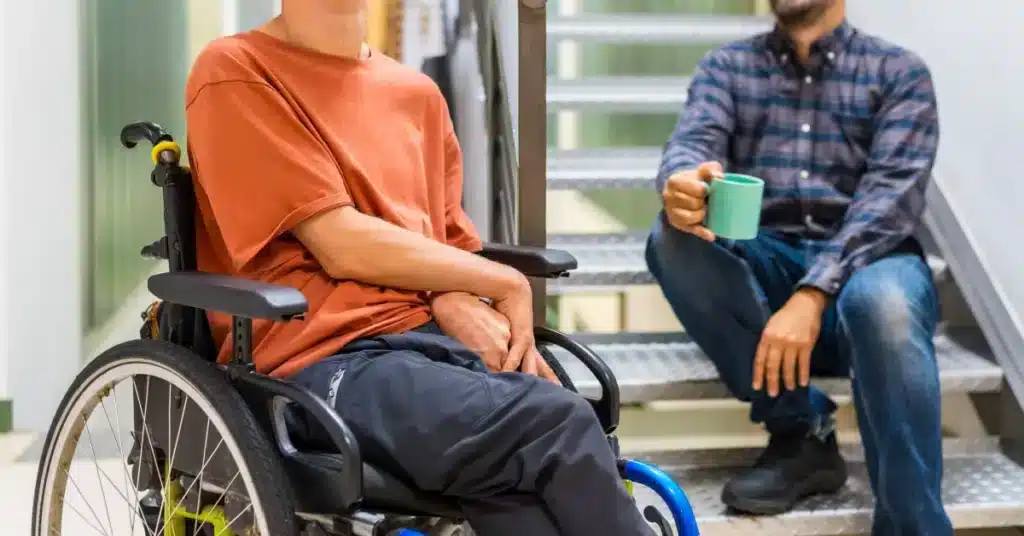
If your son, daughter, sibling, or ward was hurt, neglected, or abused in a Community Integrated Living Arrangement (CILA) in Chicago, a Chicago CILA abuse lawyer at Mixan Mahony, LLC can help your family get answers at no cost. CILAs are meant to give adults with intellectual and developmental disabilities a safe home in the community, and families rely on providers to keep that promise. When a provider breaks it, a Chicago CILA abuse lawyer can investigate what happened and explain your options under Illinois law.
More Ways We Help Injured People and Families
- Assisted Living Abuse and Neglect Lawyer
- Behavioral Health Facility Abuse and Neglect Lawyer
- Home Health Care Negligence Lawyer
- Hospice Neglect Lawyer
- Independent Living Community Injury Lawyer
On This Page
Many CILA residents cannot describe what happened to them, which puts the burden on families to notice changes and ask questions. Call (312) 262-3971 or use our contact form to talk with our team at 444 W. Lake St.

What a CILA Is Under Illinois Law
Under the Community-Integrated Living Arrangements Licensure and Certification Act, 210 ILCS 135/3, a CILA is a living arrangement where 8 or fewer people with a developmental disability live under the supervision of a licensed community developmental services agency. The Illinois Department of Human Services licenses those agencies and must inspect the records and premises of each CILA at least once every 2 years under 210 ILCS 135/4.
Chicago has many CILA homes, often ordinary houses, two-flats, or apartments on residential blocks, operated by agencies that run several homes across the city and suburbs. Residents usually depend on staff for medication, meals, bathing, transportation, and supervision around the clock. Each resident should have an individual plan that spells out the support and supervision they need, and staff are expected to follow it.
Harm We See in Chicago CILA Homes
Families contact a Chicago CILA abuse lawyer on our team about a wide range of harm, including:
- Physical or sexual abuse by staff or other residents.
- Choking during meals when a resident’s diet texture or supervision plan was not followed. See our page on choking injuries in care settings.
- Falls and fractures during transfers, bathing, or outings. See falls and fractures in care settings.
- Elopement, when a resident who needs supervision leaves the home and is hurt. See elopement and wandering injuries.
- Medication errors and missed seizure, diabetes, or bowel-care protocols.
- Unexplained bruises, burns, weight loss, or changes in behavior.
- Financial exploitation of a resident’s benefits or personal funds.
- Deaths after any of these failures, which may support a wrongful death claim.
Warning signs families tell us about
- A loved one who suddenly resists going back to the home or becomes fearful around certain staff.
- Injuries the staff cannot explain, or explanations that change.
- Frequent staff turnover, new faces at every visit, or homes that seem short-staffed.
- Missing belongings, clothing, or money.
- Poor hygiene, soiled clothing, or untreated skin problems.
- Hospital visits the agency did not tell you about promptly.
One sign does not prove abuse or neglect, but patterns matter. Write down what you notice with dates and names. If the answers you get do not add up, a Chicago CILA abuse lawyer can help you sort out what happened.
Why CILA Residents Are Especially Vulnerable
Many CILA residents have limited speech, cognitive disabilities, autism, seizure disorders, or medical conditions that require careful daily support. Some cannot report abuse at all. Others are not believed when they try. Staff in small homes often work alone on overnight shifts, which means a single careless or abusive employee can cause serious harm before anyone notices.
That is why the records matter so much. A Chicago CILA abuse lawyer looks at what the individual plan required, how the home was staffed, what incident reports say, and whether the agency responded to earlier warning signs.
Reports, Investigations, and Records
Allegations of abuse and neglect in CILAs are investigated by the IDHS Office of the Inspector General. The IDHS Division of Developmental Disabilities publishes OIG abuse, neglect, and exploitation information by CILA provider. Under 210 ILCS 135/14, the Department must make information about each agency’s licensure, survey results, and substantiated findings available on its website.
Illinois law also allows authorized electronic monitoring in a resident’s room under the Authorized Electronic Monitoring in Community-Integrated Living Arrangements and Developmental Disability Facilities Act, 210 ILCS 165, subject to consent and notice rules. Families thinking about a camera should follow those rules carefully.
Do we have to wait for the OIG?
No. An OIG investigation and a civil claim are separate. The OIG decides whether an allegation is substantiated; it does not compensate the resident or family. Talking with a Chicago CILA abuse lawyer early can help preserve video, phone records, and staffing records while the investigation is still under way.
Who Can Be Held Responsible
Depending on the facts, responsibility may extend beyond the staff member who was on shift. Parties that may share responsibility include:
- The licensed community developmental services agency that operates the home.
- Parent companies and management organizations.
- Direct support professionals, house managers, and nurses.
- Staffing agencies that supplied workers.
- Day programs, transportation providers, and other contractors.
- Physicians or pharmacies involved in medication errors.
Often the root cause is not one bad shift. Understaffing, poor training on choking or seizure protocols, weak background checks, and ignored complaints can all point to agency-level failures, and a Chicago CILA abuse lawyer investigates each of them.
When CILA Neglect Leads to a Death
Some CILA failures become fatal. A missed choking precaution, an unattended seizure in a bathtub, an elopement into traffic, or a medication error can end a life quickly. When a resident dies because of abuse or neglect, Illinois law allows a wrongful death claim on behalf of the surviving family, and the estate may bring a survival claim for what the resident suffered before death. Under 740 ILCS 180/2, a wrongful death action is generally filed within 2 years after the death.
How a Chicago CILA Abuse Lawyer Builds Your Case
We request the resident’s individual service plan, behavior and dietary plans, medication administration records, incident reports, staffing schedules, training files, and any OIG findings. We compare what the plan required with what staff actually did, and we work with physicians and care-standard reviewers when the medical questions call for it.
We also explain how a guardian can act for the resident and how any recovery may affect benefits such as SSI or Medicaid, so families can plan for the resident’s long-term needs, including tools such as a special needs trust.
Guardians and family members
A guardian or other authorized representative can usually act for an adult resident. If no guardian is in place, a Chicago CILA abuse lawyer can explain the options, including how a parent or sibling may be appointed so a claim can move forward.
Why Families Call a Chicago CILA Abuse Lawyer Early
Video systems overwrite footage, staff leave, and handwritten logs get lost. Calling a Chicago CILA abuse lawyer soon after you notice a problem can help preserve that evidence and protect your loved one while the facts are gathered. A Chicago CILA abuse lawyer can also send preservation letters to the agency and its contractors so key records are not destroyed.
Families do not need to know whether they have a case before calling. A Chicago CILA abuse lawyer at our firm listens first, explains the deadlines that may apply, and outlines next steps without pressure.
Questions to Ask the CILA Agency After an Injury
Families have the right to ask questions, and the answers often shape what happens next. Before you speak with a Chicago CILA abuse lawyer, consider asking the agency, in writing when possible:
- Who was on shift, and how many staff were working in the home at the time?
- What does my loved one’s individual plan require for supervision, meals, bathing, and medication?
- Was an incident report completed, and was the event reported to the OIG?
- Is there video from inside or outside the home, and will it be preserved?
- Which hospital or clinic treated my loved one, and when was the family notified?
- Has this staff member or this home been the subject of earlier complaints?
Keep copies of every email and letter. If the agency refuses to answer, delays, or gives answers that conflict with the medical records, bring that information to a Chicago CILA abuse lawyer. Those gaps can be important evidence about how the home was run.
Moving your loved one to a safer home
If you believe your loved one is not safe, you can ask the Independent Service Coordination agency and IDHS about changing providers. Moving does not end a claim, and we can help you document the conditions in the current home before the move.
Illinois Deadlines and Fault Rules in CILA Cases
- Most injury claims: 2 years under 735 ILCS 5/13-202.
- Shared fault: under 735 ILCS 5/2-1116, an injured person is barred only if their fault is more than 50 percent of the cause; otherwise damages are reduced by their share.
- More than one defendant: under 735 ILCS 5/2-1117, all defendants found liable are jointly and severally liable for medical expenses, and for other damages a defendant less than 25 percent at fault is severally liable while one 25 percent or more at fault is jointly and severally liable.
- Wrongful death: under 740 ILCS 180/2, an action is generally filed within 2 years after the death, with exceptions in the statute.
- Medical providers: 2 years from discovery with a 4-year outer limit under 735 ILCS 5/13-212(a), with different rules for minors.
Some deadlines are paused for people under a legal disability, but those rules are technical. A Chicago CILA abuse lawyer can confirm the deadline that applies to your family.
Compensation in a Chicago CILA Case
Depending on the facts, a Chicago CILA abuse lawyer may seek compensation for:
- Medical and hospital bills, therapy, and future care.
- The cost of moving to a safer home or a different provider.
- Pain and suffering, emotional distress, and disability.
- Loss of a normal life.
- Funeral and burial expenses and the family’s loss when a resident dies.
Every case is different, and no lawyer can promise a result. Our role is to gather the evidence, explain your options honestly, and pursue the claim you choose.
CILA Cases in Cook County Courts
Most Chicago injury lawsuits are filed in the Law Division of the Circuit Court of Cook County, which sits at the Richard J. Daley Center, 50 W. Washington St., a short walk from our office at 444 W. Lake St. Cases involving homes in suburban Cook County are usually filed in the same Law Division, while homes in DuPage, Will, Lake, or Kane counties are handled in those circuit courts.
What to Do Next
- Make sure your loved one is safe and receiving medical care.
- Ask the facility or provider for the incident report and the care plan in writing.
- Photograph injuries and the room or area where the event happened.
- Write down the names of staff and the dates and times of conversations.
- Ask in writing that video and electronic records be preserved, and call us for a free review.
Related Practice Areas
You may also find these pages helpful:
- Illinois CILA abuse and neglect claims
- Chicago nursing home abuse and neglect
- behavioral health facility abuse
- sexual abuse and assault
- Chicago personal injury lawyers
Talk With a Chicago CILA Abuse Lawyer at Mixan Mahony, LLC
When a loved one with a disability is hurt in a group home, families often feel shut out by the agency. A claim cannot undo the harm, but it can pay for care and hold a provider accountable. When you call a Chicago CILA abuse lawyer at our firm, we listen, explain the deadlines, and walk you through the next steps.
Meet the Partners

Mixan Mahony, LLC was founded by Colleen Mixan Mikaitis and Mackenzie J. Mahony. Both partners are personally involved in the cases the firm handles for clients in Chicago and across Illinois, and you can reach them through our Chicago office by phone or video.
No attorney fee unless we recover for you. Your first consultation is free. How case costs and expenses are handled is explained in writing in the fee agreement before any work begins.
Contact Mixan Mahony, LLC
Mixan Mahony, LLC
444 W. Lake St., Suite 1707
Chicago, IL 60606
Phone: (312) 262-3971
View our Chicago office on Google Maps
We are near the Clark/Lake CTA station and serve families in every Chicago neighborhood and throughout Illinois.
Practice Areas.

Car Accident

Sexual Abuse and Assault

Trucking Accidents

Wrongful Death

Medical Negligence

Uber/Lyft Accidents

Work Injuries

Nursing Home Abuse

Motorcycle Accidents

Pedestrian Accidents

Slip and Fall

COMMONLY ASKED
Questions About Chicago CILA Abuse Claims
What does a Chicago CILA abuse lawyer do?
A Chicago CILA abuse lawyer investigates abuse, neglect, or injuries in a Community Integrated Living Arrangement, gathers plans, incident reports, staffing records, and OIG findings, identifies every responsible party, and pursues a claim for the resident or family.
Who licenses CILA homes in Chicago?
The Illinois Department of Human Services licenses community developmental services agencies that certify CILAs under 210 ILCS 135, and it must inspect each CILA’s records and premises at least once every 2 years.
How many people live in a CILA?
Under 210 ILCS 135/3, a CILA is a living arrangement for 8 or fewer people with a developmental disability under the supervision of a licensed agency.
Do we have to wait for the OIG investigation to finish?
No. An OIG investigation and a civil claim are separate. Talking with a lawyer early can help preserve records and video while the investigation is under way.
Can a guardian bring a claim for a CILA resident?
Yes. A guardian or other authorized representative can usually act on the resident’s behalf, and we explain how that process works.
Can we put a camera in our loved one’s CILA room?
Illinois allows authorized electronic monitoring under 210 ILCS 165, subject to consent and notice requirements. Follow those rules before installing a device.
What if our loved one died after CILA neglect?
Illinois law allows a wrongful death claim on behalf of surviving family members, and the estate may bring a survival claim. A wrongful death action is generally filed within 2 years after the death under 740 ILCS 180/2.
How long do we have to file a CILA abuse claim in Illinois?
Most injury claims must be filed within 2 years under 735 ILCS 5/13-202. Some rules differ for people under a legal disability, so ask a lawyer promptly.
What does it cost to talk with a Chicago CILA abuse lawyer at Mixan Mahony, LLC?
The consultation is free, and there is no attorney fee unless we recover for you. How case costs are handled is explained in writing in the fee agreement.